By Radome Team
|
September 28, 2026
What Is Asset Performance Management? Benefits, Software & Strategy
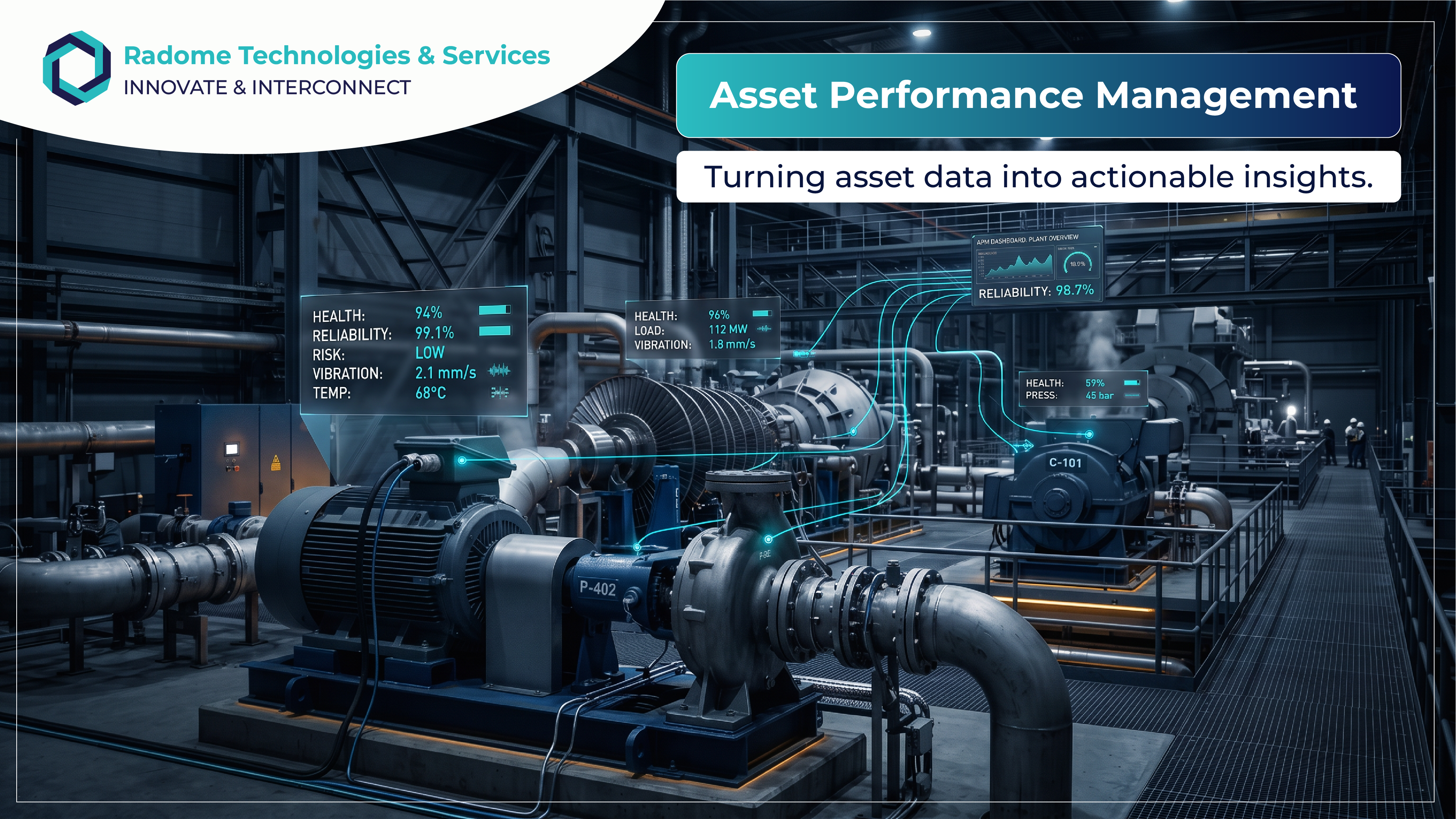
Industrial organizations rely on complex physical assets to keep operations running. Production equipment, machinery, vehicles, aircraft, and other critical assets must perform reliably. This helps avoid downtime, higher maintenance costs, disruptions, and safety risks.
This is where Asset Performance Management (APM) becomes important.
Asset Performance Management focuses on how well an asset performs. It assesses asset health and reliability. It uses operations and maintenance data to support better decisions across the asset lifecycle.
Modern industrial environments generate large volumes of sensor data, maintenance records, inspection results, and equipment performance information. However, data alone does not improve reliability. Organizations need a structured way to turn this information into meaningful maintenance and operational actions.
What Is Asset Performance Management (APM)?
Asset Performance Management is a structured approach to monitoring, analyzing, and improving the performance, health, reliability, and lifecycle of physical assets.
It helps organizations understand:
- How critical assets are performing
- Whether equipment health is deteriorating
- Which assets require attention
- What maintenance or operational actions should be prioritized
- How asset reliability can be improved over time
In practical terms, Asset Performance Management connects asset data with decision-making.
Instead of relying entirely on fixed maintenance schedules, organizations can use equipment performance data, asset health indicators, and maintenance history to make more informed decisions based on actual operating conditions and asset criticality.
Asset Performance Management is broader than maintenance
Maintenance is an important part of APM, but Asset Performance Management takes a broader view of the asset.
It can include:
- Asset health monitoring
- Equipment performance analysis
- Reliability management
- Predictive maintenance
- Predictive analytics
- Anomaly detection
- Maintenance optimization
- Asset criticality assessment
- Lifecycle performance analysis
The objective is to improve asset reliability and operational performance while balancing maintenance requirements, costs, and risk.
Key Problems Asset Performance Management Solves
Unplanned Equipment Downtime
Unexpected equipment failure can disrupt production and increase maintenance costs.
Traditional maintenance approaches often rely on fixed schedules or reactive repairs. These methods may not always reflect the actual condition of an asset.
Asset Performance Management helps organizations monitor equipment performance, identify developing issues, and prioritize maintenance activities based on asset condition and operational importance.
The goal is not to prevent every failure. It is to improve how we spot risks. It also helps us plan fixes before problems cause major disruption.
The operational impact of maintenance performance can be significant. McKinsey notes that maintenance makes up 20–40% of operating costs in heavy industries. It can also drive 30–50% of overall equipment effectiveness losses. This shows why better asset reliability and maintenance decisions are a key operational priority.
Inefficient Maintenance Practices
Performing maintenance too often can cause unnecessary labor and replacement costs.
Delaying maintenance can raise the risk of equipment failure.
Maintenance optimization helps organizations make better decisions by considering factors such as equipment condition, operating data, failure history, and asset criticality.
Difficulty Prioritizing Critical Assets
Not every asset has the same impact on operations.
The failure of one component may have minimal consequences, while another may disrupt an entire production process.
A strong Asset Performance Management strategy considers both the condition of an asset and the consequences of its failure. This helps teams prioritize maintenance resources where they can create the greatest operational impact.
How Does Asset Performance Management Work?
An asset performance management system connects operational data with maintenance and reliability decision-making.
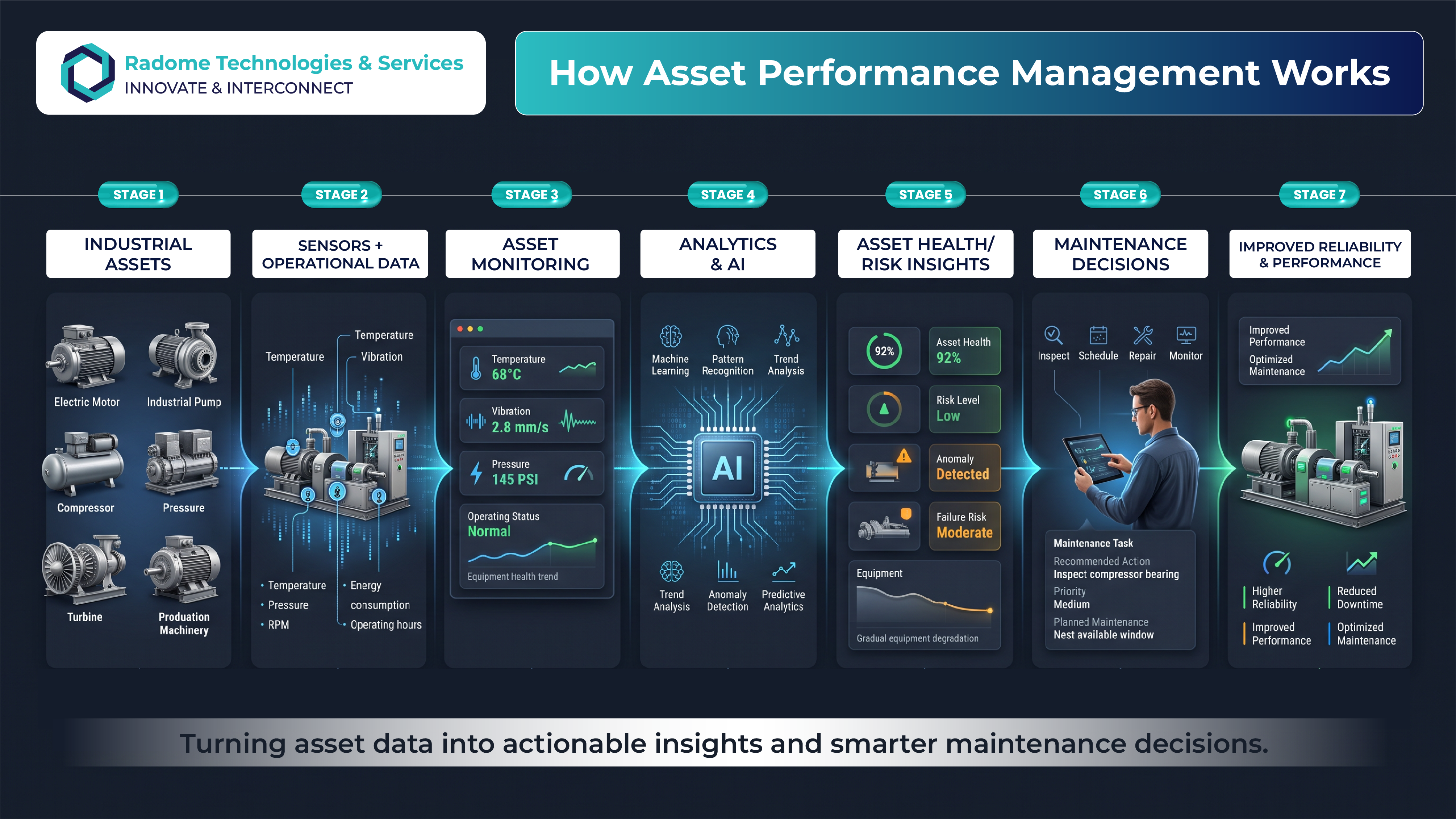
While specific implementations vary, most systems follow five key stages.
1. Data Collection
Relevant information is collected from sources such as:
- IoT sensors
- SCADA systems
- PLCs
- Enterprise Asset Management (EAM) systems
- CMMS platforms
- Inspection records
- Failure reports
- Maintenance history
The focus should be on collecting data that provides useful insight into asset performance rather than simply gathering large volumes of information.
2. Asset Monitoring
Organizations monitor indicators related to asset health and equipment performance.
Depending on the application, this may include temperature, pressure, vibration, energy consumption, operating hours, production performance, or other condition indicators.
Real-time monitoring can help identify changes in equipment behavior that may require further investigation.
3. Performance and Reliability Analysis
Asset data is analyzed to identify:
- Performance degradation
- Repeated failures
- Reliability trends
- Abnormal operating conditions
- High-risk or critical assets
This provides the context needed to support better maintenance and operational decisions.
4. Predictive Analytics and Anomaly Detection
Advanced asset performance management solutions may use predictive analytics, machine learning, and anomaly detection to identify patterns in equipment behavior.
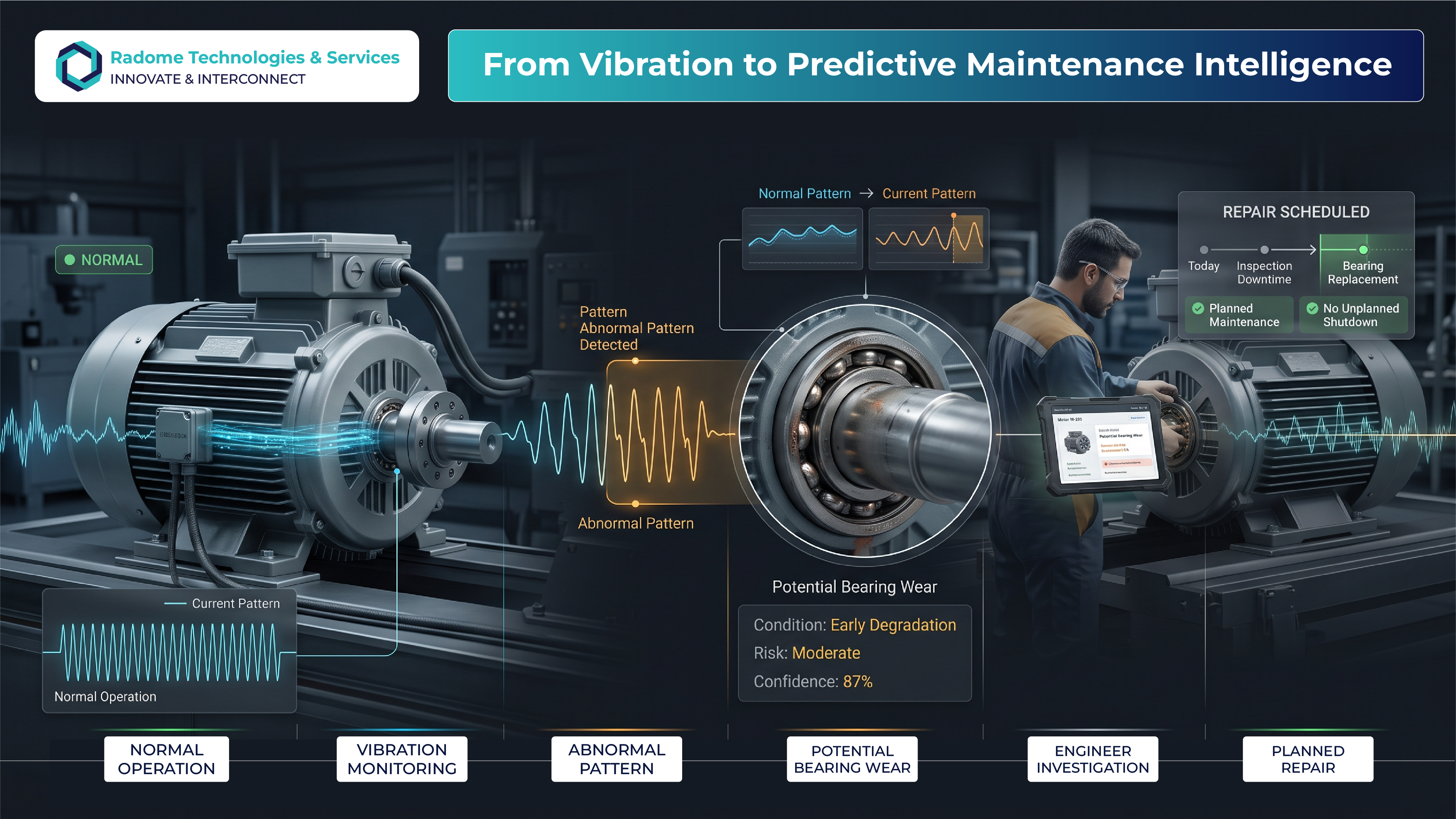
For example, an AI-powered system can analyze historical and real-time sensor data to identify deviations from normal operating conditions.
This can support predictive maintenance by helping teams identify potential issues before they develop into equipment failures.
However, the value of these insights depends on data quality, operating conditions, engineering knowledge, and how effectively the insights are integrated into maintenance workflows.
5. Action and Decision-Making
The final value of Asset Performance Management comes from action.
Insights may help teams decide whether to:
- Inspect an asset
- Schedule maintenance
- Investigate an anomaly
- Adjust operating conditions
- Prioritize critical equipment
- Plan a repair or replacement
An alert alone does not improve asset performance. Organizations need clear processes for evaluating insights and converting them into practical actions.
Asset Performance Management Software: What Does It Do?
Asset performance management software helps organizations collect, analyze, and use asset-related data to support better maintenance and operational decisions.
Different asset performance management tools offer different capabilities, but common functions include:
Asset Health Monitoring
Provides visibility into the condition and performance of equipment.
Performance and Reliability Analytics
Helps identify performance trends, recurring failures, and potential reliability issues.
Predictive Analytics
Uses historical and operational data to identify patterns associated with equipment degradation or potential failure.
Anomaly Detection
Identifies unusual equipment behavior that may require investigation.
Maintenance Decision Support
Helps teams prioritize inspections, repairs, and maintenance activities.
Integration
An asset performance management platform may integrate with systems such as:
- Enterprise Asset Management systems
- Maintenance management systems
- IoT platforms
- Industrial data platforms
- ERP and operational systems
When evaluating asset performance management software, organizations should focus on how well the platform supports their assets, data environment, and maintenance workflows.
The best solution is not necessarily the one with the largest number of features. It is the one that provides relevant insights and helps teams act on them effectively.
In practice, organizations can bring asset health monitoring, predictive analytics, and operational data together to support maintenance and reliability teams. Radome Technologies’ ProHM+ is designed around these principles, helping organizations monitor asset health, analyze equipment behavior, and identify conditions that may require attention. By combining asset monitoring with AI-driven analytics and reliability insights, ProHM+ supports more informed maintenance decisions and helps teams improve visibility into critical asset performance.
Business and Operational Benefits of Asset Performance Management
When implemented effectively, Asset Performance Management can provide several benefits.
Improved Asset Reliability
Better visibility into asset health and performance helps organizations identify developing issues and make more informed maintenance decisions.
Reduced Equipment Downtime
Want to Know More? Schedule a Demo Call.
Schedule a Demo