
Industrial teams are under constant pressure to reduce unplanned downtime while keeping maintenance costs under control. At the same time, equipment is becoming more connected and data driven, which makes traditional schedule-based maintenance less effective.
How to Choose Predictive Maintenance Software for Assets
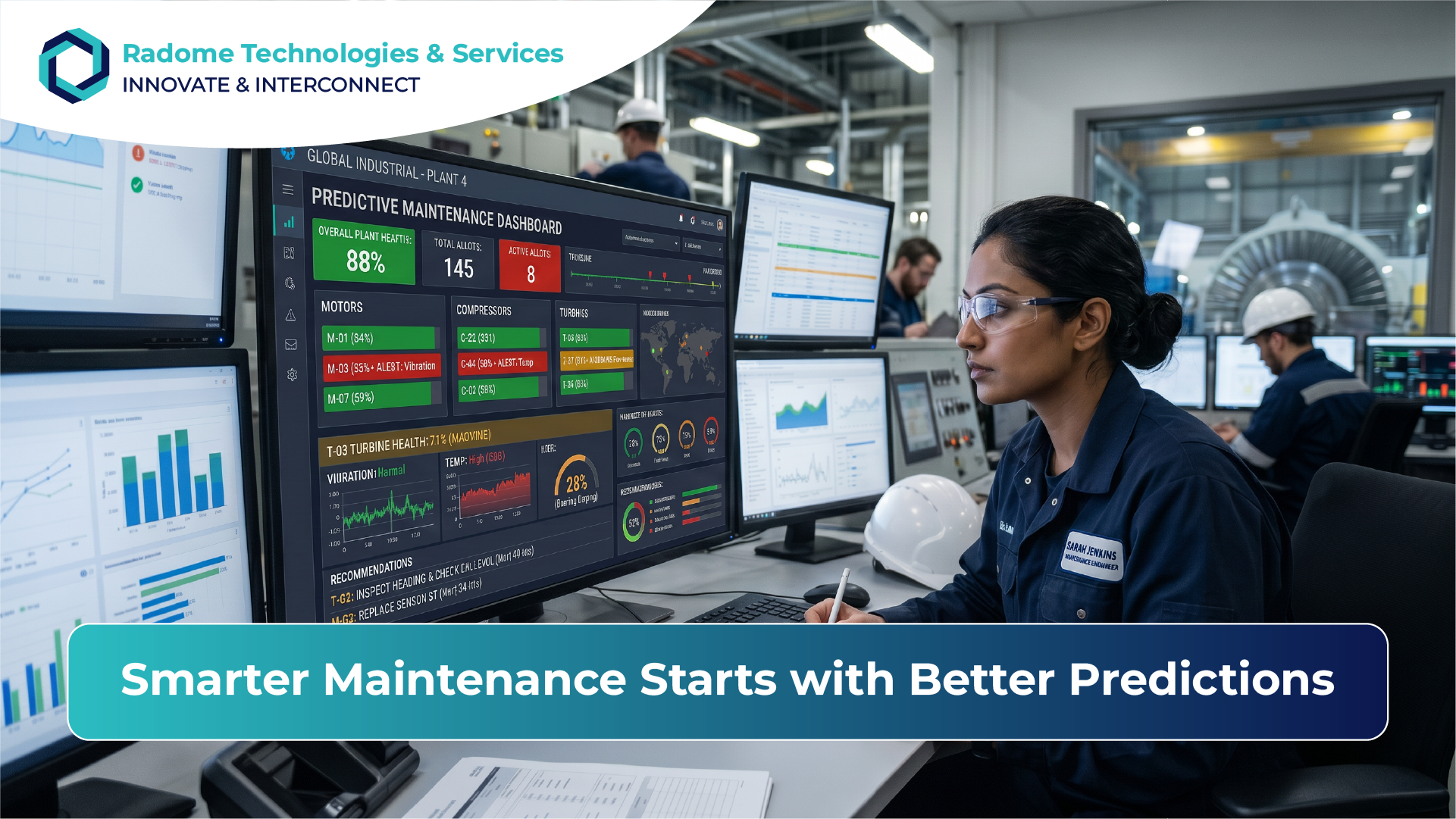
The financial impact is significant. Large industrial organisations lose around 1.4 trillion dollars every year due to unplanned downtime, which can account for roughly 11 percent of revenue. In some industries, even a single hour of downtime can cost between 100,000 dollars and 1 million dollars depending on the process.
Predictive maintenance software helps address this by using real time data to identify early signs of failure. But selecting the right system is not just about features. It determines whether the solution becomes part of daily operations or remains unused after initial deployment.
This guide explains how to evaluate predictive maintenance software in a practical and operational way.
What Is Predictive Maintenance Software?
Predictive maintenance software analyses sensor and operational data to assess asset condition and predict potential failures. It uses condition monitoring, anomaly detection, and machine learning models to spot early signs of degradation.
Unlike preventive maintenance, which follows set schedules, predictive maintenance uses real equipment data to plan maintenance. The goal is to service assets only when needed and before failures disrupt operations.
Why Choosing the Right Software Matters
Selecting the wrong solution can result in:
- unreliable alerts
- poor integration with maintenance systems, and
- limited adoption by operations teams.
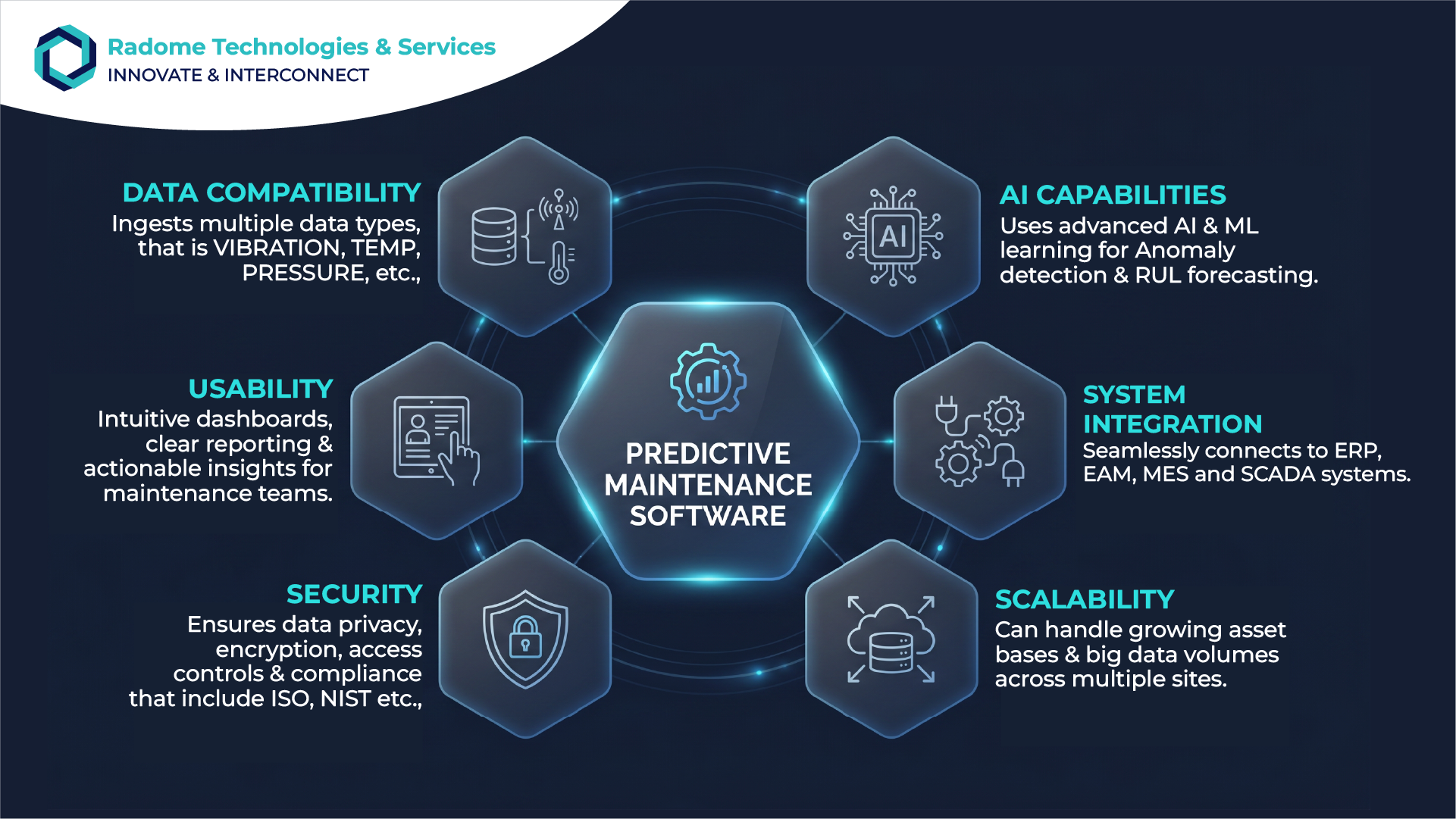
The right industrial predictive maintenance software should:
- support the types of assets in operation,
- integrate with existing systems, and
- Produce insights that translate into action.
When implemented correctly, predictive maintenance can reduce unplanned downtime by 30 to 50 percent and lower maintenance costs by 18 to 25 percent. Without these elements, predictive maintenance remains a technical experiment rather than an operational tool.
Key Criteria for Evaluating Predictive Maintenance Software
Data Compatibility and Sensor Support
The software should work with existing data sources such as PLCs, SCADA systems, and historians. It should support vibration, temperature, pressure, and electrical data without requiring complex customization.
AI and Analytics Capabilities
Look for platforms that offer:
- anomaly detection
- failure prediction or risk scoring
- trend analysis for degradation.
Effective machine learning predictive maintenance systems adapt to changing operating conditions rather than relying only on fixed thresholds.
Integration with Maintenance Systems
Integration with CMMS or asset management platforms is essential. Predictions should trigger maintenance actions rather than remain isolated in dashboards.
Scalability and Deployment
The software should scale from a few critical assets to an entire plant or fleet. Edge, cloud, or hybrid deployment should align with security and latency requirements.
Usability for Maintenance Teams
Insights must be understandable to engineers and technicians. Clear health indicators and trends improve trust and adoption.
Common Mistakes to Avoid
- Choosing software based only on features rather than operational fit
- Ignoring data quality and sensor reliability
- Treating predictive maintenance as only an IT project
- Failing to involve maintenance teams in evaluation
Predictive maintenance succeeds when embedded in daily operations.
Practical Evaluation Example
A manufacturing plant operating continuous production compares two predictive maintenance tools. One offers advanced analytics but requires manual data handling. The other integrates directly with the existing CMMS and supports vibration analysis for motors and compressors.
The plant picks the second system because predictions can create maintenance tasks automatically. This makes it useful for daily work, not just analysis.
Business Impact and ROI Considerations
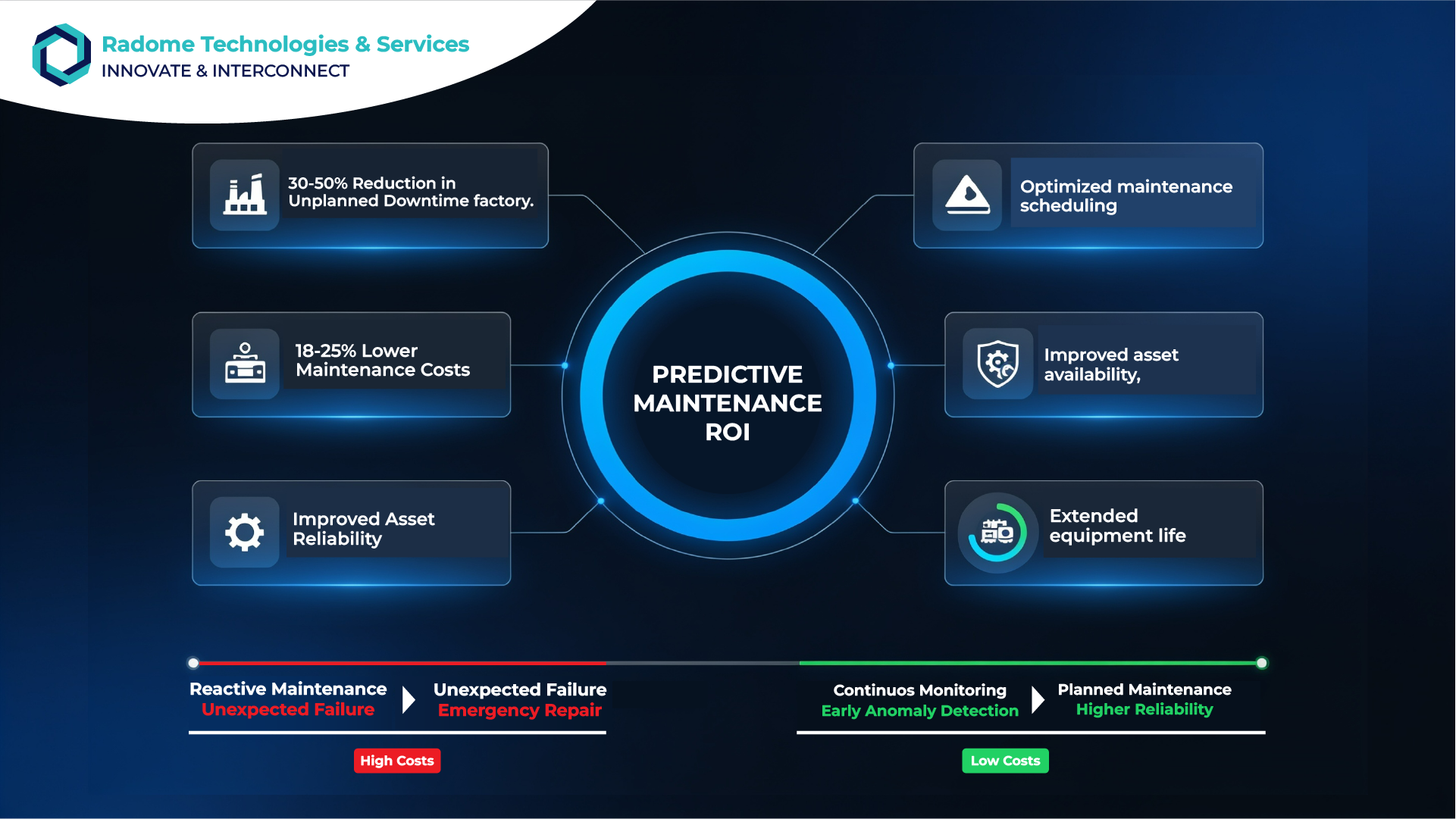
The ROI of predictive maintenance software comes from:
- reduced unplanned downtime,
- lower maintenance labor and spare-part costs, and
- extended asset life.
Even preventing a small number of critical failures can justify the investment. When evaluating solutions, organizations should focus on how predictions lead to action and measurable performance improvement.
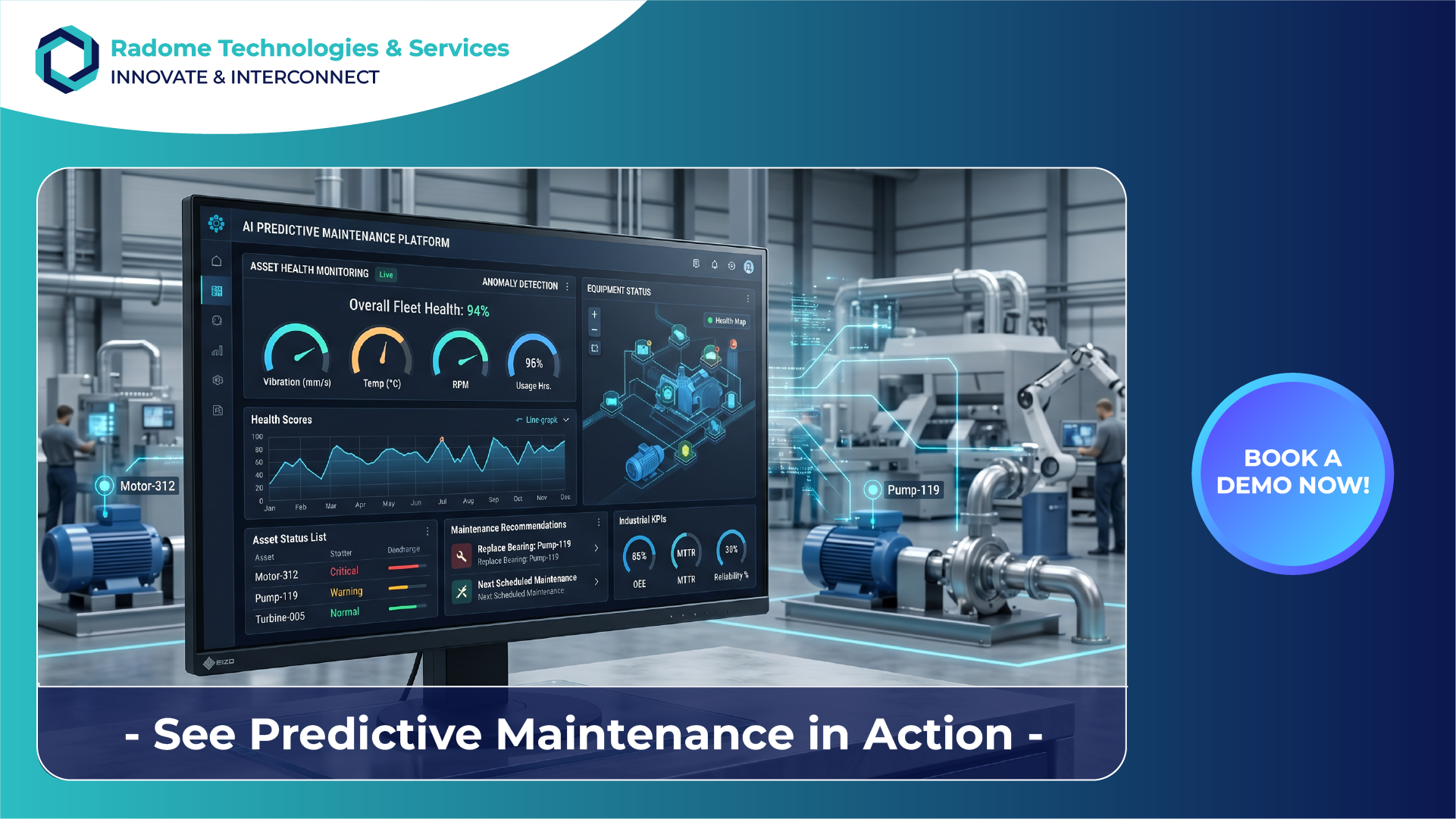
In real-world deployments, ProHM+ by Radome Technologies supports predictive maintenance across industrial and aerospace assets where reliability and safety are critical. By combining sensor data, operational parameters, and machine learning models, ProHM+ helps detect early signs of equipment degradation through continuous asset health monitoring and AI-driven anomaly detection. The platform transforms these insights into actionable maintenance recommendations, enabling maintenance teams to prioritize risks, improve asset visibility, and proactively manage equipment performance across complex asset fleets.
How This Fits into an AI Predictive Maintenance Strategy
Choosing the right software is part of a broader AI predictive maintenance strategy. It should align with:
- asset criticality,
- available sensor data, and
- operational objectives.
The software must support not only prediction but also decision-making and response.
Conclusion
Selecting the right predictive maintenance software requires balancing technical capability with operational practicality. The best solutions use existing data, fit into maintenance workflows, and provide insights to improve reliability and control costs.
When implemented correctly, AI predictive maintenance shifts maintenance from reactive response to proactive asset management.
FAQ
1. What is predictive maintenance software?
It is software that analyzes equipment data to predict failures before they occur.
2. What industries use predictive maintenance software?
Manufacturing, energy, transportation, heavy industry, and asset-intensive sectors.
3. How do I evaluate predictive maintenance tools?
Assess data compatibility, analytics capability, integration, scalability, and usability.
4. Is AI required for predictive maintenance?
AI improves detection accuracy and adaptability, especially for complex assets.
5. How long does implementation take?
It depends on asset scale and data readiness, but early results are often seen within months.