
In aviation, safety and efficiency are inseparable. Modern fleets generate terabytes of flight data daily, and the challenge is no longer lack of information but how to transform raw numbers into real-time, actionable insights.
AI-Powered FOQA: Redefining Flight Safety and Operational Performance
This is where Flight Operational Quality Assurance (FOQA) and Artificial Intelligence (AI) come together. By integrating AI into FOQA programs, airlines and operators are uncovering hidden patterns, predicting failures before they occur, and building a proactive framework for flight safety and performance monitoring.
What is FOQA and Why It Still Matters
Flight Operational Quality Assurance (FOQA) is a proactive safety program that collects and analyzes flight data from sources like:
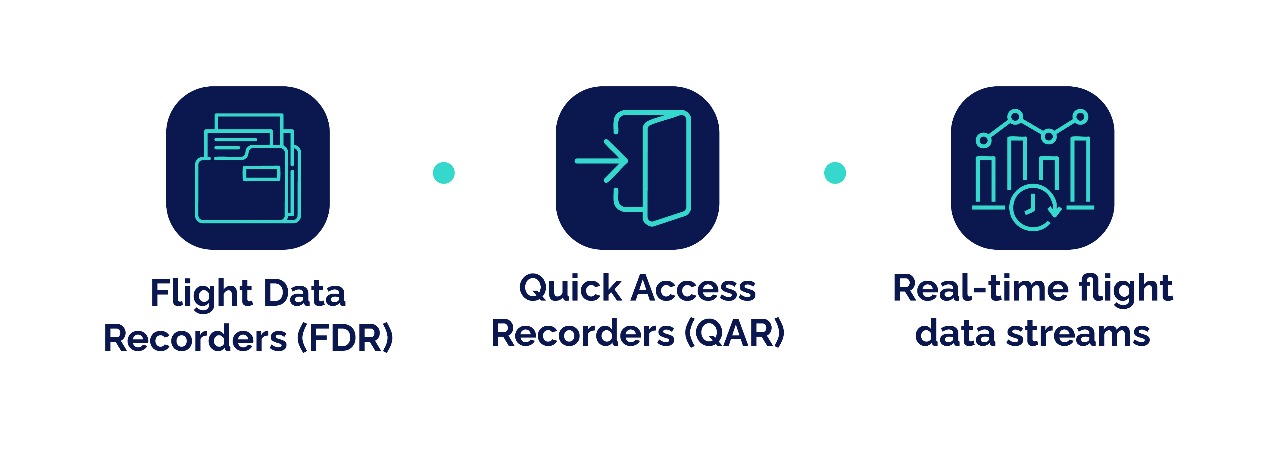
Its purpose is simple: identify operational risks and prevent accidents before they happen. Traditionally, FOQA teams would manually review flight data for exceedances (like unstable approaches or excessive engine parameters) and report findings to improve training and SOPs.
But with fleets growing larger and data more complex, manual FOQA review is no longer enough.
How AI Enhances FOQA Programs
AI transforms FOQA by moving from descriptive to predictive and prescriptive insights. Here’s how:
- Automated Anomaly Detection: Machine Learning models can scan millions of flight records to highlight rare but critical anomalies — many of which human reviewers would miss.
- Predictive Maintenance: AI correlates FOQA events with engine performance, component degradation, and fuel efficiency, allowing maintenance to be scheduled before costly breakdowns.
- Intelligent Event Prioritization: Instead of overwhelming safety teams with thousands of alerts, AI ranks events by severity, risk impact, and recurrence patterns.
- Natural Language Insights: With Natural Language Processing (NLP), AI can help interpret FOQA data, presenting key insights in an easier-to-understand format for pilots, engineers, and safety managers.
Real-World Applications of FOQA + AI
- Engine Health Monitoring: AI detects gradual N1/N2 or EGT trends linked to turbine wear. Maintenance can act early, preventing in-flight shutdowns.
- Fuel Burn Optimization FOQA data + AI identifies inefficiencies in climb/cruise phases, saving millions in annual fuel costs.
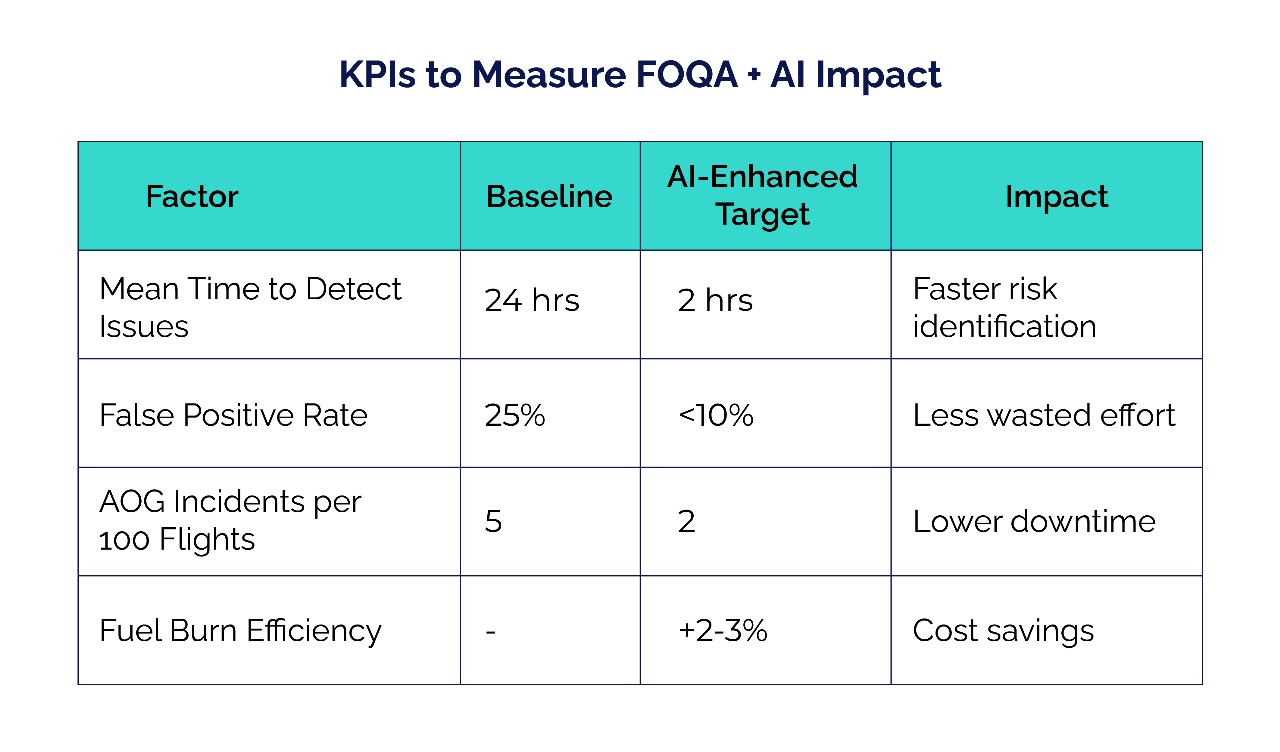
- Reduced AOG Events Airlines report up to 30–40% fewer unscheduled groundings when FOQA is AI-enabled.
- Pilot Training Improvements Pattern recognition in flight profiles pinpoints where training or SOP refinements are needed.
Challenges in Adopting FOQA + AI
- Data Quality Issues : Missing or corrupted sensor data.
- Integration Complexity: Legacy systems (DAS, AMOS, MRO tools).
- Pilot Privacy Concerns Requires anonymization and role-based access.
- Model Explainability Regulators demand transparent algorithms.
Mitigation strategies include data governance frameworks, explainable AI models, and phased pilots to prove ROI.
Regulatory & Privacy Considerations
Both FAA and EASA support FOQA but emphasize:
- Pilot privacy protections
- Secure data handling
- Event review boards to ensure safety culture
AI must comply with these frameworks while improving predictive accuracy.
The Future of FOQA + AI
- Edge AI: Real-time anomaly detection in the cockpit.
- Federated Learning: Global fleets share anonymized models without sharing raw data.
- LLM-powered Summaries: Automated root-cause reports for safety boards.
- FOQA + AHM Convergence: Merging flight operations with Aircraft Health Monitoring for a complete safety ecosystem.
Conclusion
FOQA and AI are no longer optional — they are the backbone of next-gen aviation safety. Airlines that adopt AI-driven FOQA benefit from lower costs, safer skies, and data-driven operational excellence. The smartest move is to begin with a 90-day pilot program, measure KPIs, and then scale across the fleet with regulator alignment.